Post-Encounter Learner part

Filled out by Learners
Purpose: Learner assessment, testing (elaborating on the simulation exercise /encounter/ or any theoretical knowledge)
This part typically accommodates the questionnaire aimed at learner assessment. Questions may refer to the Learner-SP encounter (or the simulation exercise with a manikin) and/ or those eliciting theoretical knowledge and comprehension. Consequently, the Post-Encounter part consists of scored items, thus contributing to the Learners' grade.
It is typical to have open-ended questions (text items) that require Learners to phrase the answers themselves. In turn, such answers need to be evaluated by designated (and competent) faculty members.
NOTE: The Post-Encounter Learner part often contains a Step 2 CS Patient Note. Further information on this test type can be read at How to Set Up Step 2 CS Patient Note.
For details on creating a checklist, see the Checklists page.
The Item counter option is checked by default, meaning the added items are numbered sequentially.
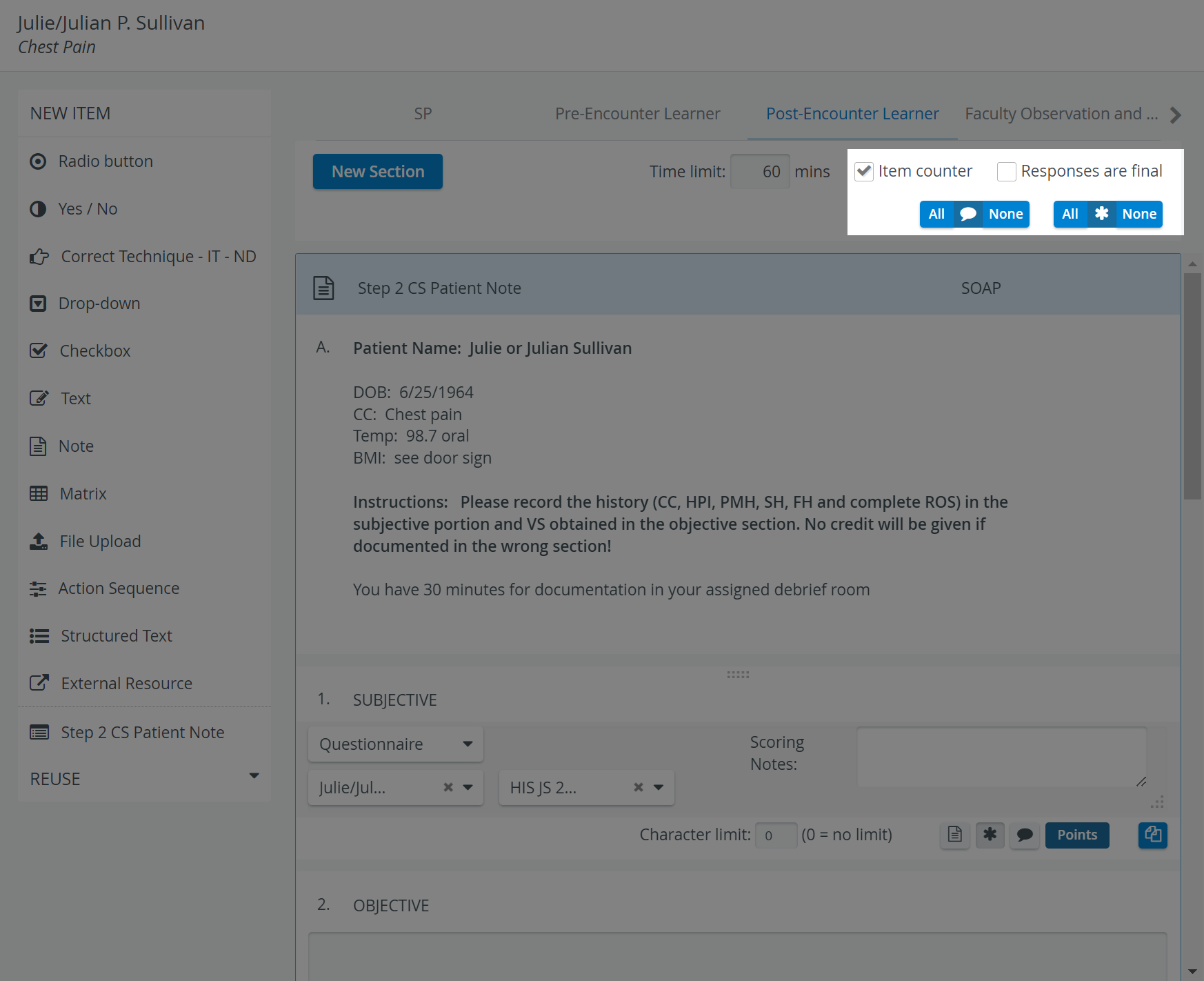
Time limit
For checklists created for Learners, a time limit can be set up at the top of the tab in the Case Content editor. Once the time is up, the system signs the Learner out and saves all the answers entered up to that point.
IMPORTANT: Even if the Learner does not click the Submit button, the system will save the entered responses and textual answers as if they were submitted.
Responses are final
If the Responses are final option is checked, once the Learner submits the filled-out checklist, they will not have access to modify it anymore.

All-None option
The following two parameters can be determined individually for each added item. Still, the All-None buttons at the top of the checklist set these parameters the same (either enabled or disabled) for all items added to that checklist.
Comment box: If enabled for all items, each item will display a comment field during data entry, providing space for additional notes.
Answer required: When enabled, submitting the checklist is not allowed until all questions are answered; if none are required, then the checklist can be submitted even if none of the questions have been answered.
Show Points for All Items
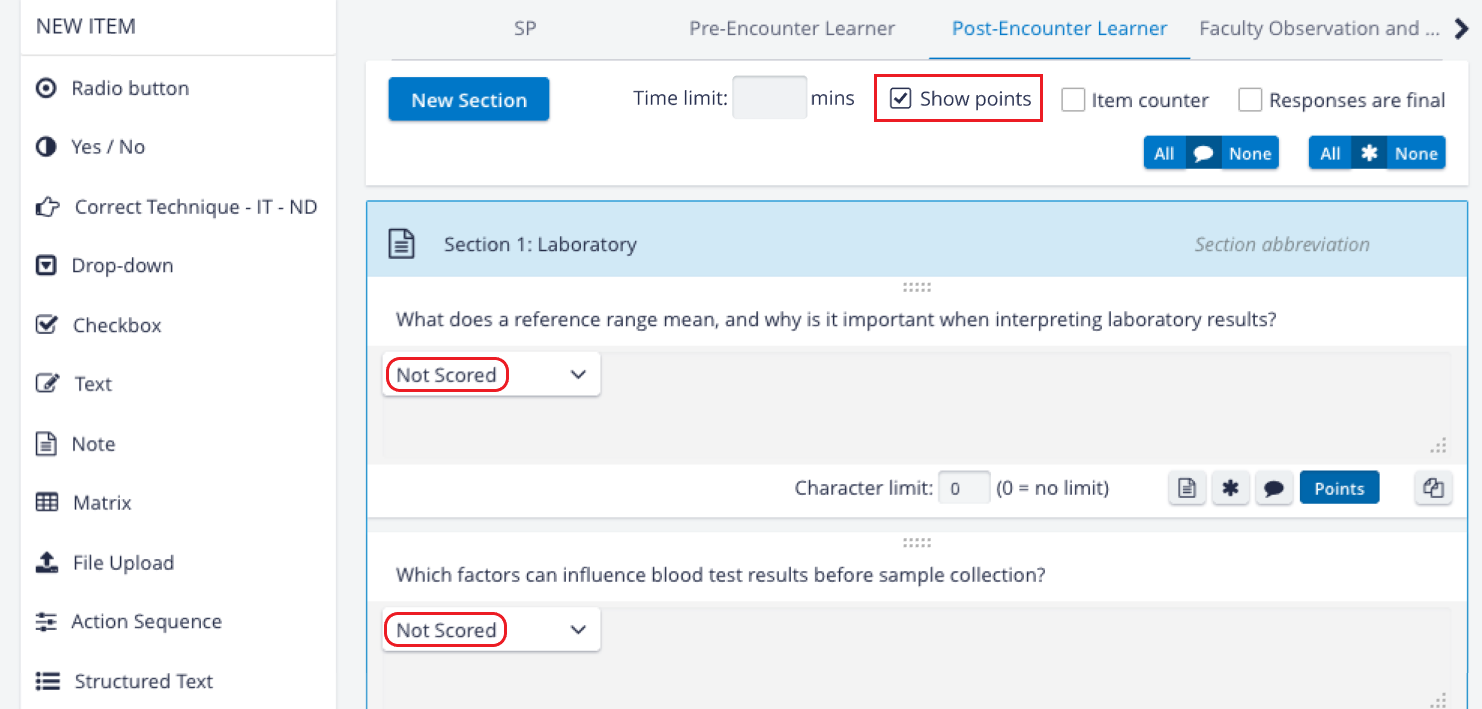
Admin or case manager users can show scoring details (Points) for all items in a checklist at once, with one click, for a better overview of how each item is scored:
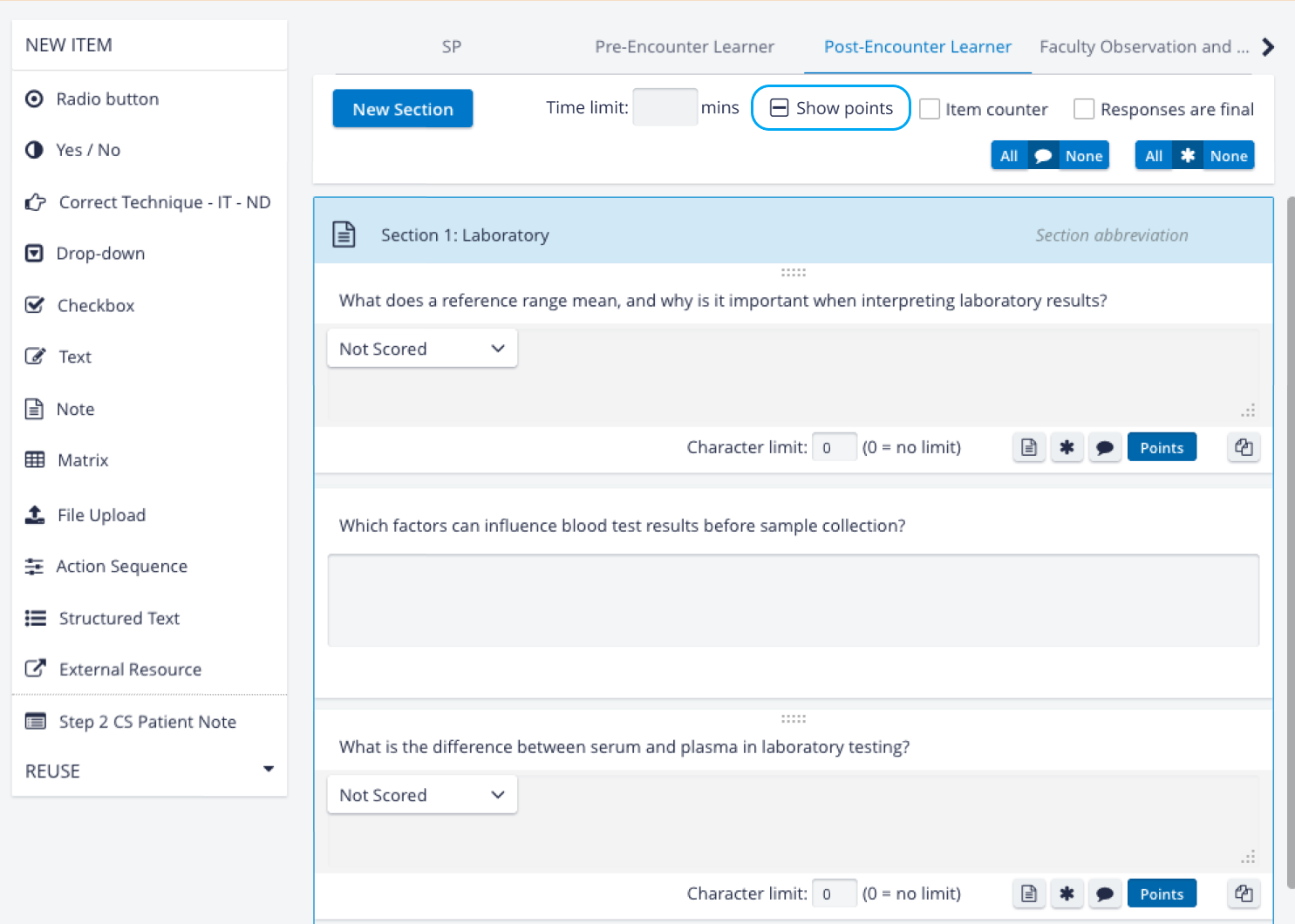
The ‘Show points’ checkbox has three states:
Checked - scoring information is shown for all items in the part.
Dash (horizontal line) - scoring information is shown only for some items (‘partially checked’).
Unchecked - scoring information is hidden for all items.
Joint Evaluation Option
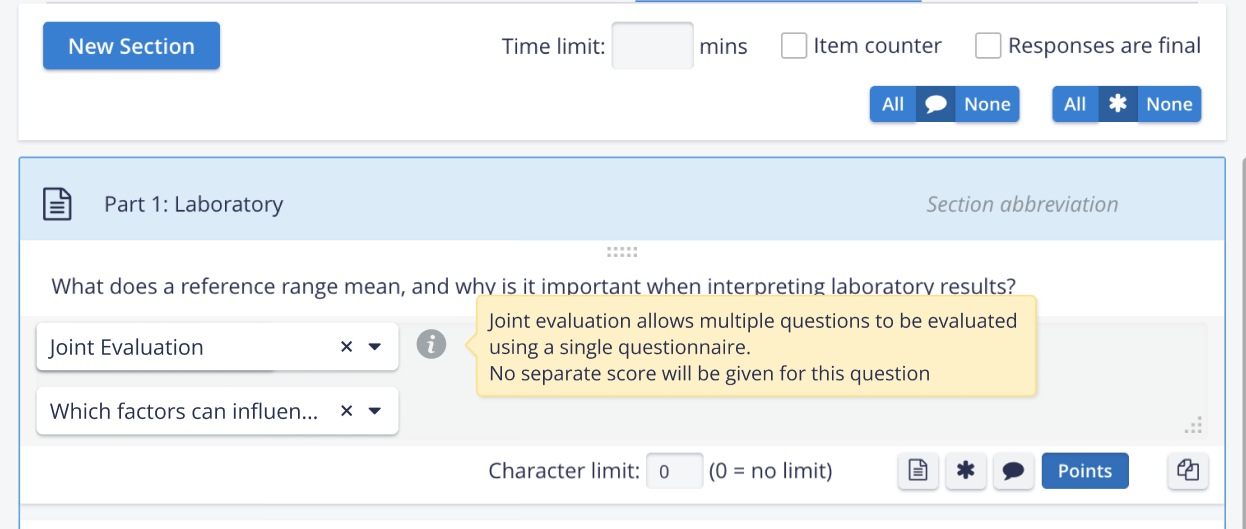
The new Joint Evaluation Option enables grouping questions for OEQS scoring in Case Manager. With this feature, questions can be linked in the Case editor so that they can be graded together using a single grading questionnaire in OEQS.
A joint‑evaluation item always relies on a main item that uses a questionnaire scoring method.
One or more joint‑evaluation items can be linked to a main item simultaneously.
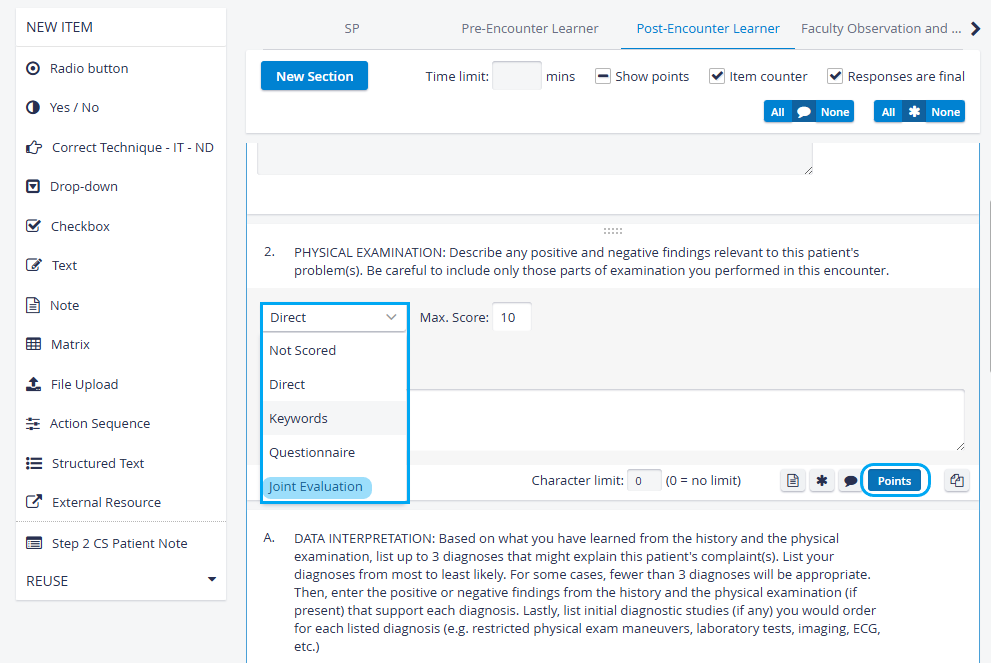
Scoring method dropdown - Joint Evaluation selected
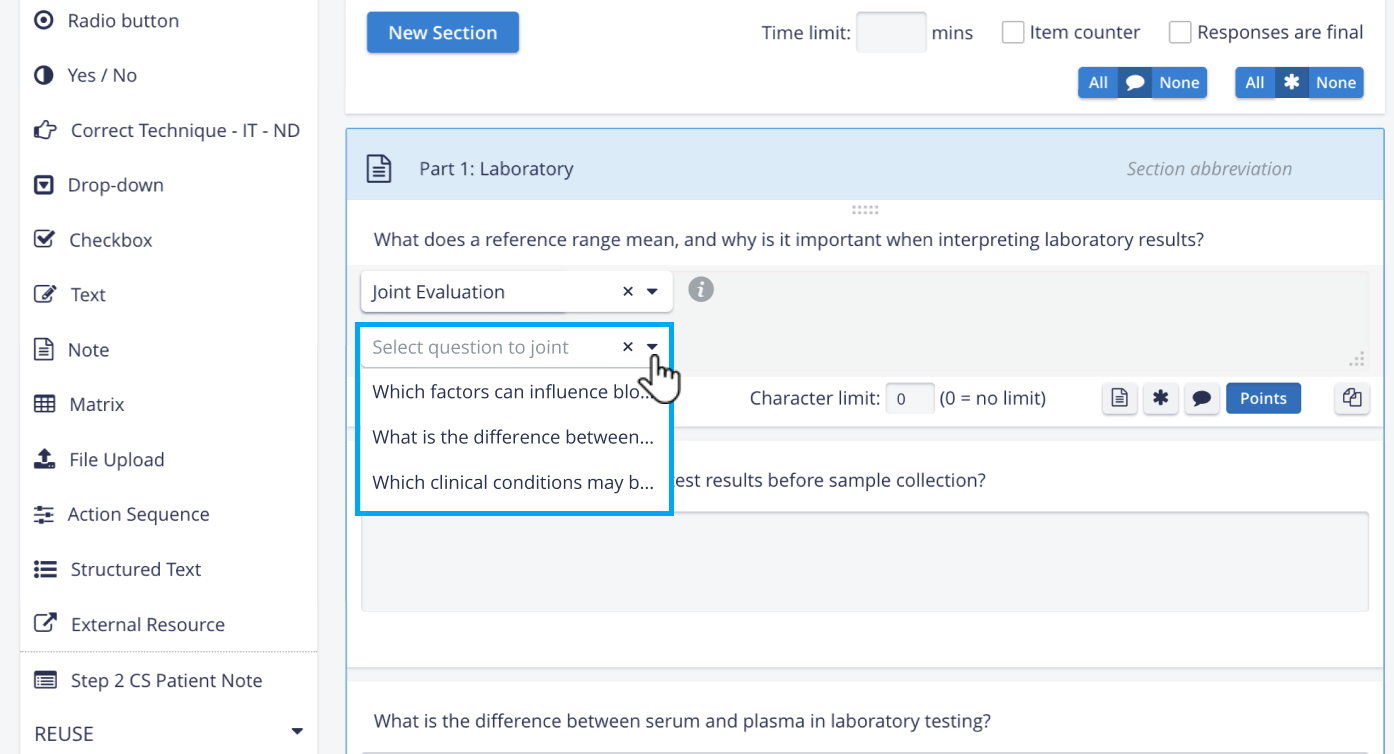
IMPORTANT: A joint item can only select a main question from within the same section; the main question must be located in the same section as the joint item.
Joint evaluation option is available for text and structured text items in the Pre-encounter and Post-encounter parts of a case.
NOTE: Only questions within the same case part and section can be linked.
For more details, go to How to set up Joint Evaluation and How to use Joint Evaluation.
For further information, visit our Case Manager and Cases - How to pages or watch our Case Manager Training Videos.