General System Information
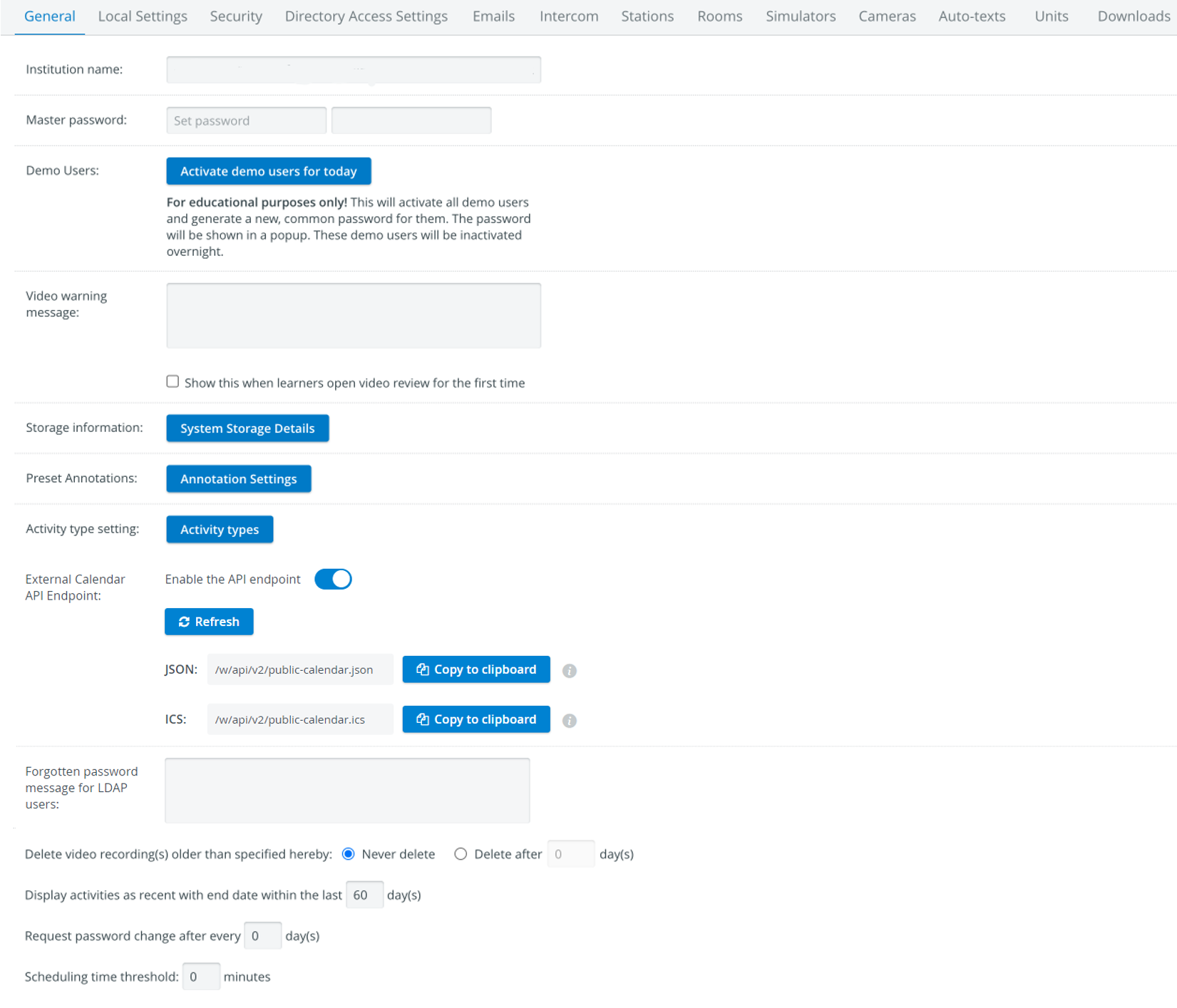
The System icon on the Dashboard navigates to the General tab of the System Manager.
The General tab contains recommended settings and additional options for configuring your system to your preferences.
Important - Autosave in System
Settings can be saved in the System module by
switching to any other tab,
returning to the Dashboard.
Recommended settings
Institution name
Fill out the Institution name field to customize your LearningSpace login page.
The text you enter in this field will appear above the login fields of your LearningSpace login page.
Demo Users
The Demo Users function is for educational purposes—to help demonstrate the system's functionalities during training.
Demo users must be activated manually by clicking the Activate Demo Users for Today button. They will be automatically deactivated during nightly maintenance.

See more at How to Activate Demo Users.
Video Warning Message
Use the Video warning message field, for example, to inform your learners about how your institution uses video recordings that feature them or their peers.
System Storage Details
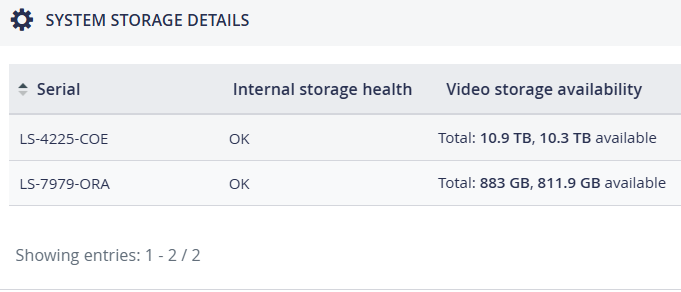
The Show System Storage Details button shows you details about your storage usage.
Annotation Settings
You can save the preset annotations in the Annotation Settings.
Activity Types
Activity types are categories you can apply—define for an entire activity in the Basics tab—to mark every activity-related event with the selected type and color.
External Calendar API Endpoint
By activating the External Calendar API Endpoint toggle, users can process events using their software integration components and work with the event information however they choose, such as forwarding them to external calendar applications.
An input field allows users to customize the time interval it displays, ranging from 1 to 180 days.

More information: External Calendar API Endpoint and How to Utilize External Calendar API Endpoint
Forgotten password message for LDAP users
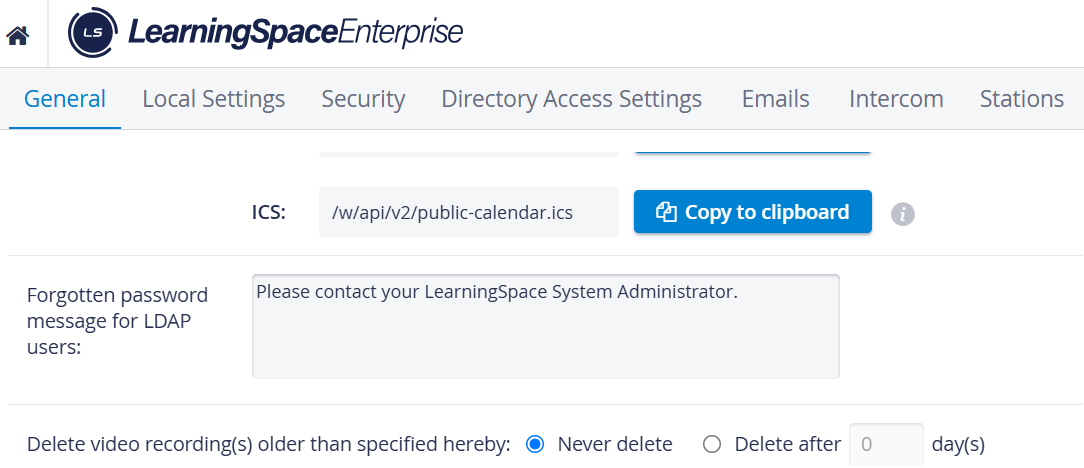
If you log in your users to LearningSpace using LDAP authentication, you can use this field to inform them what to do if they forget their password.
Schedule Actions
Tell the system when to perform specific actions according to other actions:

Delete video recording(s) setting
Determine after how many days the system should delete saved recordings automatically (if at all) by using the ‘Delete video recording(s) older than specified hereby’ option. The system permanently deletes any video files older than the specified age in days.
The two options are:
Never delete
Delete after __ day(s)
The automatic deletion schedule does not apply to locked videos.
Important
Always lock the recordings you want to keep, because once a recording is deleted, it cannot be recovered.
Recent Activities
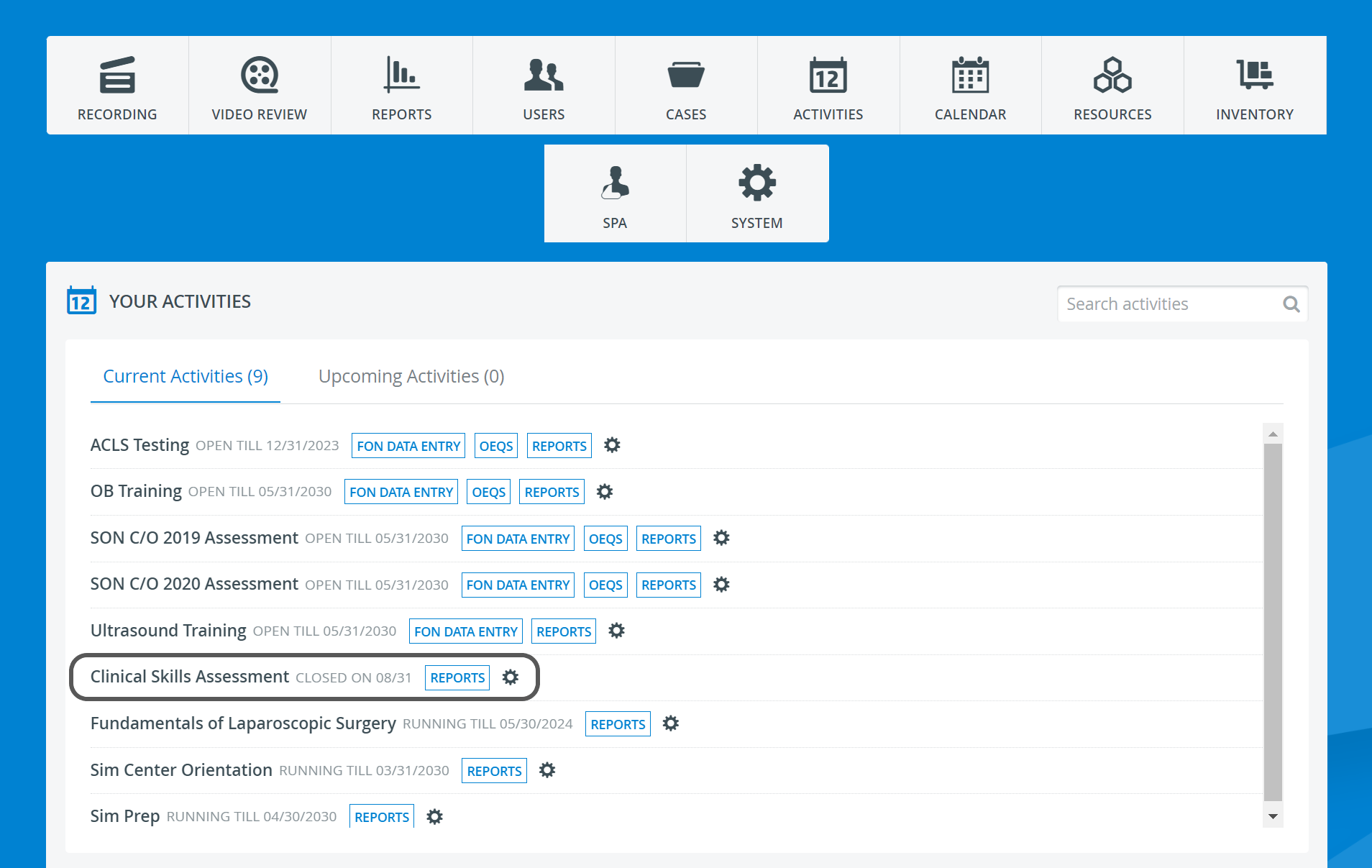
Define the number of days for which an Activity counts as a Recent Activity. This value determines which Activity is displayed as recent(ly closed) under current Activities on the dashboard.
Also, the Recent activity filter can be applied in Advanced Scheduling and on the Recent Usage Tab of Resources.
Request password change
Set how many days after your users should change their passwords. Your users will receive a password change request once the period expires.
Scheduling Time Threshold
Define the number of minutes you can schedule new events before and after existing events. Find out more about Scheduling Time Threshold.
General Settings Checkboxes
Select any additional general settings checkbox as desired:

Use low-latency SPlayer
Enabling this option will switch to SPlayer from QuickTime when using Firefox, Internet Explorer, or Safari.
IMPORTANT: This option is already outdated; it is only relevant for earlier versions of LearningSpace when using non-HTML5-compatible cameras. Currently, the only supported browser is Google Chrome.
Find out which browsers are supported on our Workstation Computer Requirements page.
Enable cookie-based station authorization
In an environment, e.g., without static IP reservations, device IPs can change, which means the system will eventually fail to identify already configured computers or tablets.
By selecting this option, the system will remember configured workstations using cookies in their browsers rather than by IP address.
Enable card-based login for Hallway stations
By selecting this option, users can log in to the system at any Hallway station by swiping/scanning their ID card, which contains the Card ID registered in the system for the respective user.
Learn more about How to use Card-based Login.
The Card ID cannot be longer than 127 characters - otherwise, the following error message will be displayed:

Request password change at first login
When users log in to the system for the first time, they must reset their password.
Show SP and FON names on video review
If the checkbox is selected, both SP and Faculty (FON) columns will be displayed in the List View of the Video Review module, containing the names of SPs and FON Data Entry users who are featured on or contributed to each recording.
Show simulator names on video review
If the checkbox is selected, a column will be displayed in the List View of the Video Review module that shows the names of simulators used in each recording, if any were connected.
Enable video review for SPs
If the checkbox is selected, SPs can review recordings about themselves.
Only those SPs who were assigned manually by the Record control panel or automatically by Advanced Scheduling to a video recording can access it.
SPs who submitted only the SP checklist of the learner featured on the recording will also have their name appear on the recording in the SPs column. However, if the SP was not featured on (added to) the recording, the SP will not have access to view it.
Mute audio when Privacy Mode is on
When this checkbox is applied, if SP switches to Privacy Mode on their workstation, the camera feed and the room will be disabled and muted.
Allow centralised control of Privacy Mode
This new LearningSpace feature allows admins to control Privacy Mode from the Center Overview (CO) if a system-wide setting enables this.
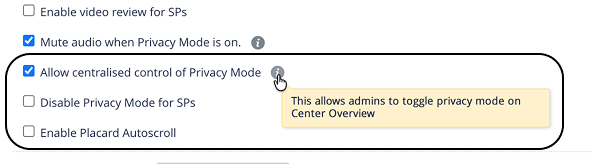
Disable Privacy Mode
Privacy mode for SPs can be centrally disabled by selecting this checkbox.
When the checkbox is not selected, Privacy mode is available for SPs.
Enable Placard Autoscroll
With this feature, if the Placard text (detailed case description) exceeds the available display space, it will autoscroll. (You can still scroll through it manually.)
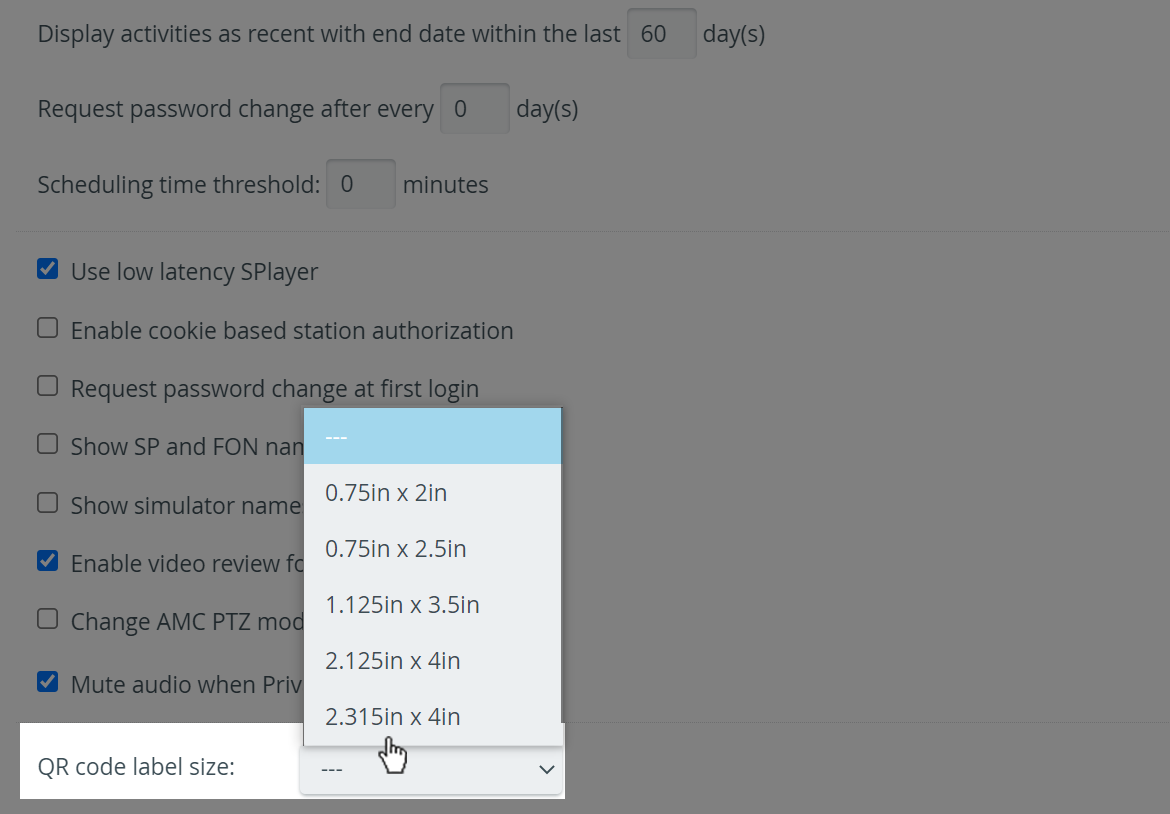
QR Code Label size
QR codes are automatically generated once an item is created in the Catalog of your Inventory manager. QR codes can then be printed and affixed to physical items during stocking.
Also, once you make a user a Transaction Assignee, the system automatically generates a printable QR code for that user so they can easily identify themselves when picking up or returning equipment.
The label size of the QR Codes can be modified under the System Manager's General tab.
Learn more about QR Codes here: QR Code Identification, How to Detect Items in Your Inventory.
Find step-by-step guides for System manager-related processes on our System - How to pages.